For wine, size remains a problem

Amongst the trends highlighted by WGSN in their work on retail trends in Asia is solo-fication. More people living alone (not new), but now more people doing things alone: shopping, eating, treating themselves - and doing this deliberately rather than apologetically.
It reminded me of a question Felicty Carter and I on our podcast A Question of Drinks: Why isn’t more wine sold in half bottles?
When you look at how people are actually behaving, the friction becomes obvious. Here’s a comment from a wine drinker in Hong Kong I spoke with recently:
“I have a beef about 750ml bottles. How many times have I not bothered to have a glass of wine when I want a treat at home because I don't want to open or drink that much wine.”
So, demand is there, but the inertia comes from the idea of pouring one glass from a big bottle. She continued:
“I think I'd be open to spending 40–50% of the equivalent of a whole bottle on a 250ml can… I’d compare it to the cost of a glass in a bar.”
Her mental calculation wasn’t based on what a bottle costs in a shop. It was based on what a glass costs in a bar — because the occasion she was recreating at home was that same small, treat moment for her.
Very different from my assumption- I always benchmarked small format against retail prices.
WGSN give examples of this self-treat. Retailers are now dedicating shelves to chocolate positioned not as a gift for someone else, but explicitly as a gift for yourself. In Japan, jibun-choco (“chocolate for oneself”) now sees 65% of consumers buying for themselves, vs ~54% buying for a partner.
It shouldn’t surprise us given how many of us now live solo. Around 28% of US households and ~30% in the UK are now single-person households.
Within this context, the desire for a treat hasn’t gone anywhere.
Chocolate has adapted - small, low-commitment, instantly rewarding & most importantly, no second person required. And we wonder why wine isn’t shifting as much these days.
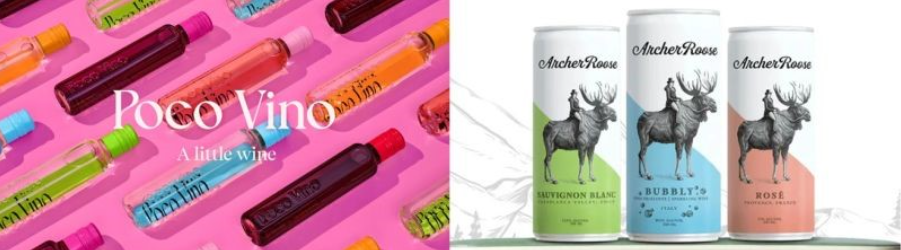
Some wine brands have responded positively. Admittedly I’m biased as a fan of both of these: Poco Vino & Archer Roose both feel closer to how people are actually behaving, positioning their smaller formats as intentional, premium - not a compromise.
The implications for wine feel hard to ignore:
1. Smaller formats need reframing — less “functional,” more desirable
2. The growth ‘occasion’ is increasingly individual
3. Premium needs to work in everyday treat moments, not just special occasions
We still want indulgence and we’re still willing to pay for quality especially nowadays for ourselves – premium without permission, personal applause without feeling self-conscious.
Chocolate has made this behaviour easy. Wine, in many cases, still makes it harder than it needs to be.